On-Page SEO Kya Hai? Complete Beginner’s Guide
On-Page SEO: A Complete Beginner’s Guide
Introduction
In today’s digital world, simply creating a website and publishing content is not enough. If you want your website to gain visibility in search engines and reach the right audience, understanding On-Page SEO is essential.
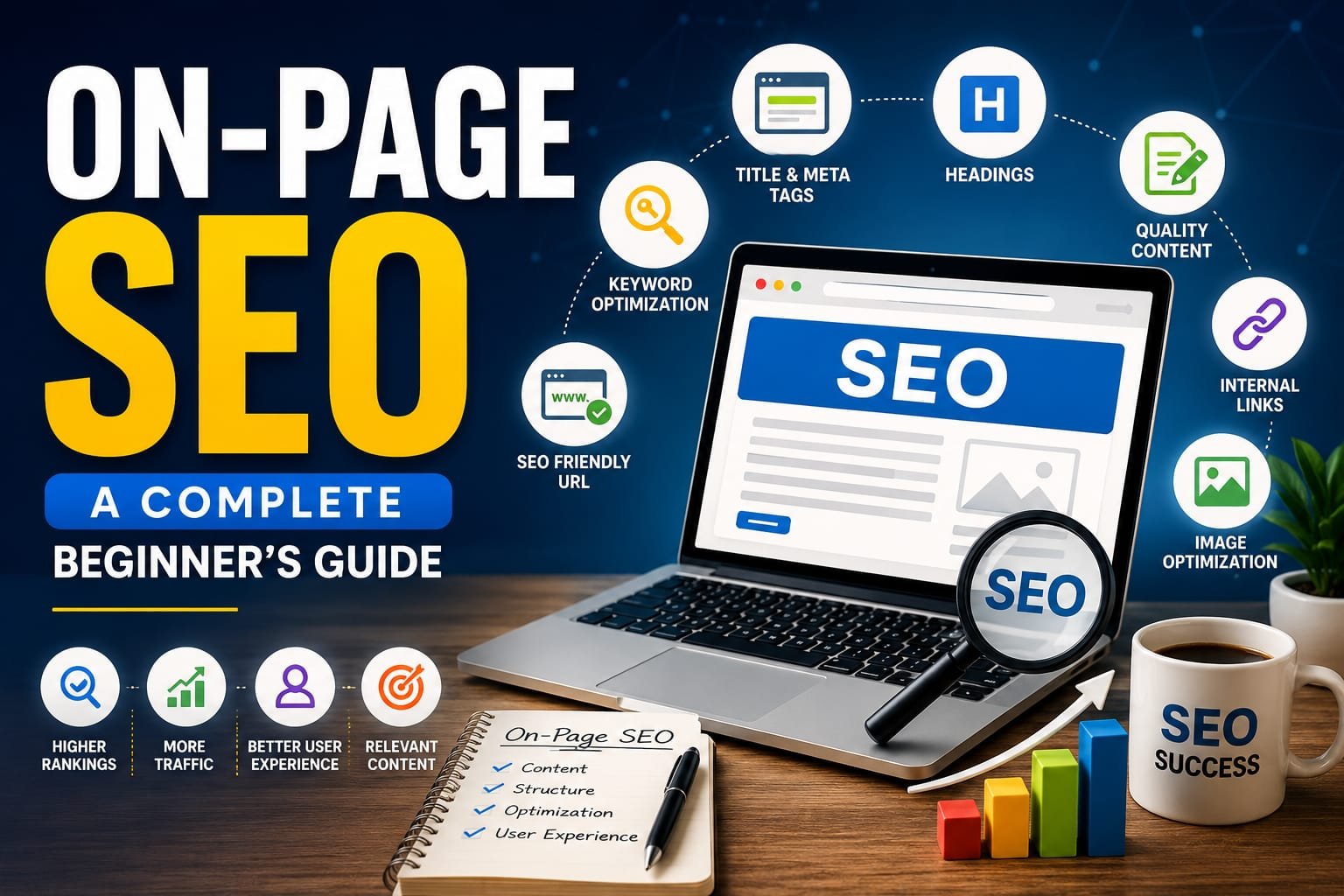
On-Page SEO is the process of optimizing individual web pages to make them more useful for visitors and easier for search engines to understand. It includes important elements such as content, keywords, headings, titles, images, URLs, and internal links.
What Is On-Page SEO?
On-Page SEO refers to optimizing the different elements of a webpage. The main goal is to make the page clear, useful, well-structured, and relevant to the user’s search.
For example, if you write a blog about Digital Marketing, optimizing its title, headings, keywords, content, images, and URL is part of On-Page SEO.
Why Is On-Page SEO Important?
On-Page SEO helps create a strong foundation for your website’s overall SEO. When your content is properly organized, visitors can find and understand information more easily, while search engines can better understand what your page is about.
A good On-Page SEO strategy can also improve the overall user experience of your website.
SEO Title
The SEO title is an important element of a webpage. It tells users what the page is about and can appear in search engine results.
Keep your title clear, relevant, and engaging, and naturally include your primary keyword.
Example:
On-Page SEO: A Complete Beginner’s Guide
Meta Description
A meta description is a short summary of a webpage. It gives users an idea of what they can expect to find on the page.
A good meta description should be clear, relevant, and engaging.
Proper Use of Headings
Headings help organize your content into clear sections. The main topic can use an H1 heading, while different sections can use H2 and H3 headings.
A proper heading structure makes long articles easier to read and understand.
Natural Keyword Usage
Keywords are words or phrases that people type into search engines. Using relevant keywords naturally throughout your content is an important part of On-Page SEO.
Your primary keyword can be used in the title, headings, and content where it makes sense. Avoid unnecessarily repeating the same keyword.
High-Quality Content
SEO is not only about keywords. Your content should be original, useful, informative, and written for real people.
Focus on answering your audience’s questions and providing information that is genuinely valuable to the reader.
Image Optimization
Images can make a blog more attractive and engaging, but they should also be optimized.
Use appropriate image sizes, descriptive file names, and relevant ALT text. Properly optimized images can also contribute to a better website experience.
Internal Linking
Internal linking means linking one page of your website to another relevant page.
For example, if you have already published a blog about Keyword Research, you can link to it from your On-Page SEO article. This helps visitors discover related content and improves navigation across your website.
SEO-Friendly URLs
Your website URLs should be simple, descriptive, and easy to understand.
For example:
yourwebsite.com/on-page-seo-guide/
A clean URL helps users understand the topic of the page before opening it.
Mobile-Friendly Website
Many people browse websites using smartphones, so having a mobile-friendly website is important.
Your text should be easy to read, images should display properly, and buttons should be easy to use on smaller screens.
Page Speed
Website speed is another important part of a good user experience. If a page takes too long to load, visitors may leave the website.
Optimizing images, reducing unnecessary elements, and maintaining your website properly can help improve loading performance.
Common On-Page SEO Mistakes
Beginners often make a few common On-Page SEO mistakes, such as repeating keywords unnecessarily, publishing low-quality content, using headings incorrectly, ignoring image optimization, and not adding relevant internal links.
Avoiding these mistakes can help you create cleaner, more useful, and better-structured webpages.
Conclusion
On-Page SEO is an important part of website optimization. It is not limited to adding keywords to a page. High-quality content, proper headings, optimized titles, images, URLs, internal links, and a good user experience all contribute to a well-optimized webpage.
If you are a beginner in SEO, learning On-Page SEO is a great place to start. Focus on creating useful content and making every important page easy for both users and search engines to understand.