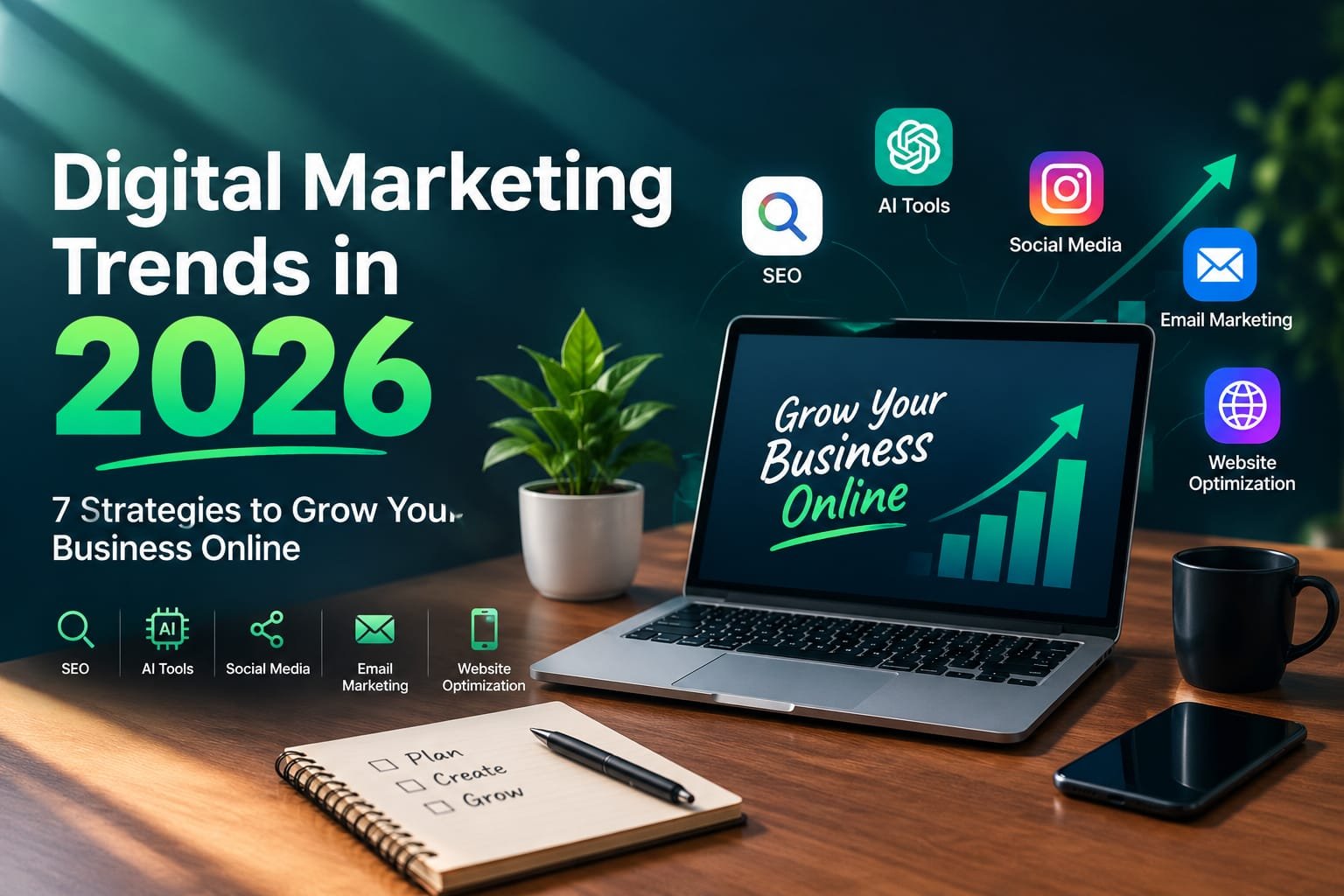
Digital Marketing Trends in 2026: 7 Strategies to Grow Your Business Online
Digital Marketing Trends in 2026: 7 Strategies to Grow Your Business Online
Digital marketing is changing rapidly in 2026. Businesses, creators, and startups are using new technologies and online platforms to reach their target audiences. From artificial intelligence to SEO and social media marketing, the right strategies can help businesses improve their online presence.
In this guide, we will explore seven important digital marketing strategies that can help you grow your business online.
Use AI Tools for Smarter Marketing
Artificial intelligence is becoming an important part of digital marketing. AI tools can help marketers generate content ideas, analyze data, research keywords, and improve productivity.
However, AI-generated content should always be reviewed, fact-checked, and improved with your own knowledge and experience.
How to use AI effectively:
- Generate blog topic ideas.
- Research audience questions.
- Create content outlines.
- Analyze marketing performance.
The goal is to use AI as an assistant, not as a replacement for original thinking.
Focus on SEO and Search Intent
Search engine optimization (SEO) helps websites attract relevant visitors from search engines. In 2026, creating useful content that matches what people are searching for remains essential.
Before writing an article, understand the search intent behind your target keyword.
For example, someone searching for “what is SEO” wants an explanation, while someone searching for “best SEO tools” may want to compare different tools.
Important SEO practices:
- Choose a relevant primary keyword.
- Write a clear title and introduction.
- Use descriptive headings.
- Add useful internal links.
- Make your website mobile-friendly.
- Answer the reader’s question accurately.
Avoid keyword stuffing. Your content should sound natural and genuinely help readers.
Create Helpful, High-Quality Content
Content marketing helps businesses educate their audiences and build trust. Useful blog posts, guides, case studies, videos, and tutorials can answer questions that potential customers have.
Instead of publishing content only to target keywords, focus on solving real problems.
For example, a digital marketing blog could publish guides about keyword research, on-page SEO, social media content planning, and Google Analytics.
A good content strategy prioritizes usefulness, accuracy, originality, and a clear structure.
Build a Consistent Social Media Presence
Social media platforms allow businesses to connect with audiences, share useful information, and build brand awareness.
Choose platforms based on your audience and goals instead of trying to be active everywhere.
Ways to improve social media marketing:
- Share educational tips and short videos.
- Publish content consistently.
- Use clear visuals and captions.
- Reply to comments and questions.
- Review engagement and reach regularly.
Consistency and audience interaction can help build a stronger online community over time.
Use Email Marketing to Build Relationships
Email marketing allows businesses to communicate directly with people who have chosen to receive their updates.
You can use email to share new articles, helpful resources, product information, or relevant offers.
Start by creating a simple signup form and offering something useful, such as a checklist or beginner’s guide.
Always obtain permission before sending marketing emails and provide an easy way to unsubscribe.
Make Your Website Fast and Mobile-Friendly
A professional website should be easy to use on both mobile phones and computers. Slow loading times and confusing navigation can frustrate visitors.
To improve your website:
- Use a responsive design.
- Compress images without sacrificing quality.
- Remove unnecessary plugins and scripts.
- Organize pages with clear navigation.
- Use readable fonts and sufficient contrast.
- Check important pages on mobile devices.
A better website experience makes it easier for visitors to find information and explore your content.
Measure Results and Improve Your Strategy
Digital marketing works best when you measure performance and use the results to make better decisions.
Tools such as Google Analytics and Google Search Console can help you understand website traffic, search queries, clicks, and user behavior.
Review your results regularly and identify which content attracts relevant visitors.
For example, if an article receives impressions but few clicks, you could review its title and meta description. If visitors leave without exploring related pages, consider adding relevant internal links.
Make changes based on evidence rather than assumptions.
Conclusion
Digital marketing in 2026 is about combining useful content, strong SEO, social media, AI-assisted workflows, and data-driven decisions.
You do not need to use every strategy at once. Start with a clear goal, understand your audience, publish helpful content, and measure your progress.
With consistency and continuous learning, you can strengthen your website’s online presence and build a sustainable digital marketing strategy.
Frequently Asked Questions
What is digital marketing?
Digital marketing is the promotion of products, services, or brands through online channels such as search engines, websites, social media, and email.
Which digital marketing skill should beginners learn first?
Beginners can start with SEO fundamentals, content writing, and basic analytics before moving into more advanced advertising and automation.
How long does SEO take to show results?
SEO results vary depending on competition, website quality, content, and other factors. It often takes several months to see meaningful progress, and results are not guaranteed.
Is AI useful for digital marketing?
Yes. AI can support research, brainstorming, analysis, and content workflows. Human review is still important for accuracy, originality, and usefulness.